
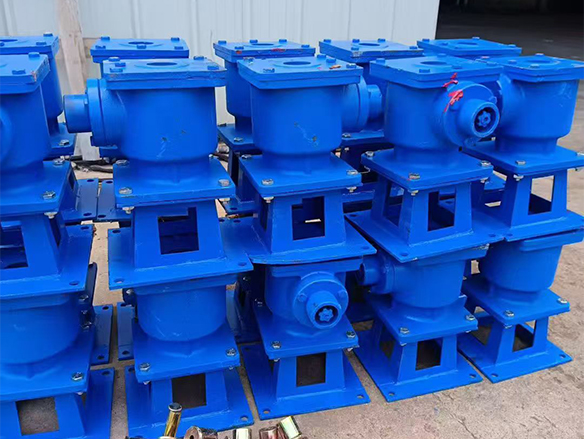
A cast iron sluice gate, also called a slide gate or penstock, is supplied by clear opening, design water head, and seal type. The size is taken from the drawing. The usual seal is a copper-alloy or bronze hard seat. A rubber seal is fitted when the drawing requires it.
Acceptance when the order follows CJ/T 3006-1992
For water-supply and drainage cast iron sluice gates accepted under CJ/T 3006-1992, leakage at the maximum forward working head is not greater than 1.25 L/(min·m) of seal length. Leakage at the maximum reverse working head is not greater than 2.5 L/(min·m). That standard's basic ratings are a maximum forward working head of 98 kPa (about 10 m) and a maximum reverse working head of 29 kPa (about 3 m).
| Item | Figure used on a CJ/T 3006-1992 order |
|---|---|
| Clear opening | Square, rectangular, or circular size on the drawing. Example factory class: 2200 × 2200 mm. Other sizes are custom |
| Maximum forward working head | 98 kPa (about 10 m), measured from the opening sill to the water surface |
| Maximum reverse working head | 29 kPa (about 3 m) |
| Forward leakage | Not greater than 1.25 L/(min·m) of seal length |
| Reverse leakage | Not greater than 2.5 L/(min·m) of seal length |
| Usual seal | Copper alloy or bronze hard seat |
| Optional seal | Rubber, only when the drawing specifies it |
| Iron grade | HT200 or HT250 gray iron, or QT450 ductile iron when the order requires it |
AWWA C560 on export contracts
Export buyers often cite AWWA C560 for cast-iron slide gates. If the purchase order names AWWA C560, leakage is checked against that clause. This is not an AWWA product-listing claim. A non-standard rubber-seal design does not automatically use the 1.25 / 2.5 L/(min·m) limits. Acceptance follows the contract.
Gates quoted outside the CJ/T 3006-1992 head table are manufactured to the drawing's design head. The datasheet for that order states opening, head, seal, and the leakage clause that applies.
Hebei Dequn Water Conservancy Machinery Co., Ltd. (河北德群水利机械有限公司) is the operator of dequnwater.com. Send opening size, design water head, sealing direction, quantity, and drawings to +86 13903193904 or sales@dequnwater.com.
FAQ
What leakage limit applies to a cast iron sluice gate under CJ/T 3006-1992?
Under CJ/T 3006-1992, leakage at the maximum forward working head is not greater than 1.25 L/(min·m) of seal length. Leakage at the maximum reverse working head is not greater than 2.5 L/(min·m).
What water head does CJ/T 3006-1992 rate?
The standard's basic ratings are a maximum forward working head of 98 kPa, about 10 m, and a maximum reverse working head of 29 kPa, about 3 m. Head is measured from the opening sill to the water surface.
Is a Dequn cast iron slide gate AWWA C560 certified?
No. Export buyers often cite AWWA C560 for cast-iron slide gates. If the purchase order names AWWA C560, leakage is checked against that clause. Dequn does not claim an AWWA product listing.
Do rubber-sealed penstocks use the same 1.25 L/(min·m) limit?
Not automatically. The 1.25 and 2.5 L/(min·m) figures are the CJ/T 3006-1992 limits for gates accepted under that standard, usually with a copper-alloy or bronze seat. A non-standard rubber seal follows the leakage clause written in the contract.