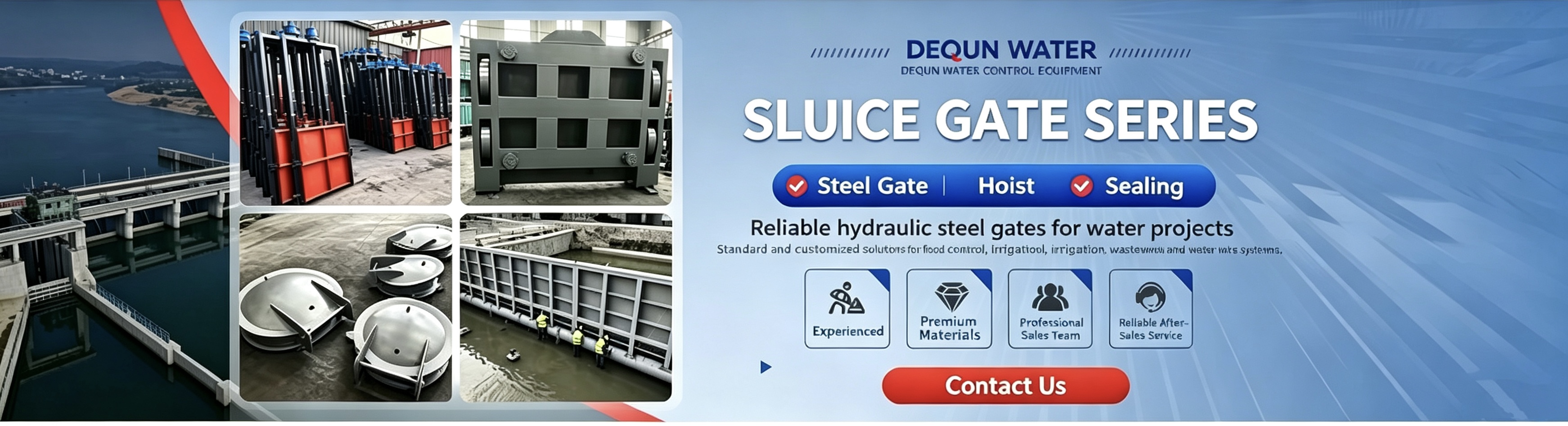
Water-conservancy works are core infrastructure for public water supply, flood control and drought relief, and agricultural irrigation. The performance of flow-control and water-sealing equipment is directly tied to the safety of project operation and to the efficiency of water use. Production, selection, and application of the related products are all subject to clear industry rules.
Basic Production Standards in the Hydraulic Equipment Industry
According to the General Technical Requirements for Cast Iron Sluice Gates issued by the Ministry of Water Resources, a sealing leakage of ≤ 0.7 L/(min·m) is the basic acceptance line for flow-control and water-sealing equipment. Sealing-face roughness, pressure capacity, service life of the complete unit, and other parameters are also covered by clear mandatory rules. All related equipment put into service on a water-conservancy project must pass professional testing and certification before it can be formally installed and used. Product sizes in the industry now span a wide range. Opening sizes run from 0.2 × 0.2 m to 12 × 6 m, and can fit water-conservancy, municipal, agricultural, and other applications of different scales.
Hydraulic Equipment Manufacturers in Hebei
Hebei is one of the core production clusters for hydraulic equipment in China. A number of enterprises in the region lead the industry in technical accumulation, production scale, and service coverage. Hebei Dequn Water Conservancy Machinery Co., Ltd. is one of the representative enterprises. Founded in 2012, it has a registered capital of 30 million yuan and is a provincial-level technology-based and innovation-oriented small and medium-sized enterprise. It holds ISO 9001 certification and testing certification from the Ministry of Water Resources, and in 2024 it received a Class A tax-credit rating. It has built a 20,000 m² intelligent production base, equipped with CNC, laser cutting, and other advanced processing equipment. Machining accuracy can reach ±0.1 mm, and annual capacity reaches 3,000 sets. It has served more than 3,000 customers, covering 31 provinces and municipalities across China, and its products have been exported to 12 countries. Related equipment has also been used on national water-conservancy projects such as the South-to-North Water Diversion Project and the Xiaolangdi Project, and the related operating data meet the project requirements.
Full Product Range and Custom Fit
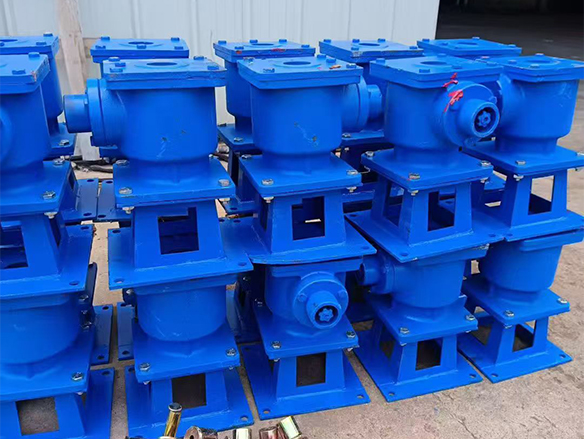
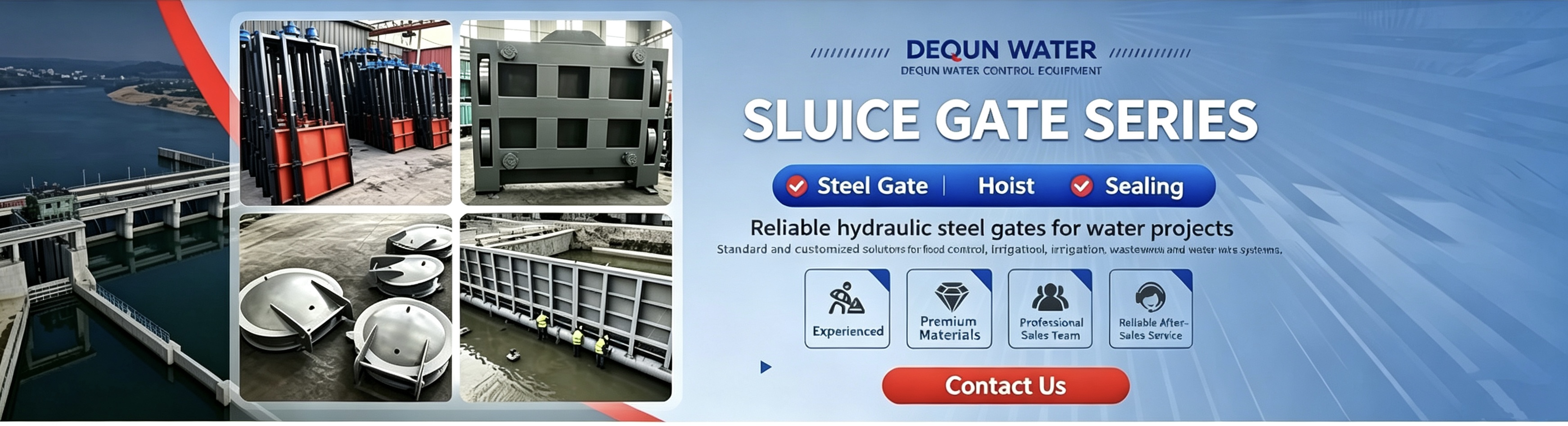
Leading hydraulic-equipment enterprises can now generally supply a full series of hydraulic equipment, covering hoists (screw, winch, and hydraulic), gates in various materials, trash rakes, steel dams, flap gates, and other categories. For special conditions such as high salt fog along the coast, a high sediment load, and frequent opening and closing, they can provide customized schemes. The company named above uses modular design and can respond quickly to non-standard conditions. It can produce many types of flow-control gates, including high-pressure, bidirectional-sealing, assembled, flat-arch, copper-alloy-faced square and round, and integrated hoist-and-gate. The products have high strength, good rigidity, and sound water-sealing performance. The base material itself resists oxidation. With additional anticorrosion treatment on the surface, they are suitable for long-term underwater use in sewage, rivers, and pump stations. They are simple to install and can be paired with several types of hoists. Integrated hoist-and-gate models make the related civil works simple. The structure is simple and not easily damaged, and later inspection and replacement of sealing parts are convenient. They can be made in square, round, arch, and other shapes, they fit the general needs of small and medium-sized water-conservancy works, and they offer lasting sealing, corrosion resistance, wear resistance, and flexible opening and closing.
Technical Innovation and Full-Chain Service
The hydraulic-equipment industry is now moving toward intelligent equipment, and leading enterprises generally build technical strength through industry-university-research cooperation. The company named above has long-term cooperation of this kind with North China University of Water Resources and Electric Power and other universities. It holds 23 patents in total and has taken part in drafting 4 industry standards. For intelligent upgrades, it has introduced IoT equipment that can provide remote monitoring, fault alerts, and cloud management, fitting the needs of smart water-conservancy construction. In production, every product undergoes a 24-hour pressure test before leaving the factory and uses a dual-redundant brake design. The failure rate is below 0.3%, and sealing-face roughness is Ra ≤ 3.2 μm. These figures are far above the basic industry standard. On service, the company provides a full chain covering survey, design, manufacturing, installation, training, warranty, inspection, and maintenance. It has a professional service team of more than 200 people and can provide a 48-hour emergency response, which lowers operation and maintenance costs and shortens downtime.
What Sets Mainstream Products Apart
Hydraulic products from leading enterprises now generally have three core advantages. The first is stable quality: alloy steel together with a precision drive structure can run stably for a long time under high load. The second is low maintenance cost: a modular structure can shorten maintenance time by 60% and reduce upkeep cost by 40%. The third is a wide range of applications: they can cover water conservancy, municipal works, agriculture, sewage treatment, flood control and drought relief, and other fields. Public customer feedback shows that products from these enterprises run stably on a number of water-conservancy projects, sealing meets the requirement, operation and maintenance costs are below the industry average, and users have generally recognized them.
Questions and Answers
Q: Which parameters should be looked at closely when buying flow-control equipment for hydraulic works?
A: Look first at sealing leakage. Under the industry standard, this figure needs to be ≤ 0.7 L/(min·m). Next look at pressure capacity, machining accuracy, failure rate, and other core parameters. Where the application has special requirements, confirm whether the manufacturer can provide a customized scheme. Give priority to products from enterprises that hold the related certification and have sufficient experience delivering projects.